Showing posts with label Cancer treatment. Show all posts
Wednesday, June 29, 2016
Breast Cancer treatment in Turkey: Brachytherapy and TrueBeam STX Treatments
Have you been diagnosed with breast cancer? Are you looking for the best treatment options for you?
Receiving the breast cancer diagnostic can change completely your life perspective. Thanks to technological development and advancements in cancer treatments, this is not true anymore.
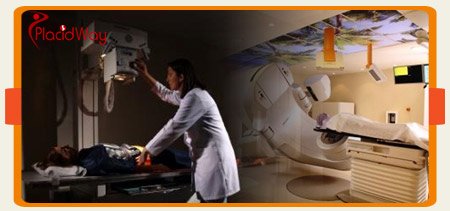
Neolife Medical Center, located in Istanbul, Turkey, offers two innovative and revolutionary treatments for breast cancer: Brachytherapy and the Novalis Radiosurgery Guided Truebeam STX.
Brachytherapy, also known as internal radiotherapy, is an alternative treatment for breast cancer in which radiation is delivered straight to the tumor inside the breast. As higher doses of radiation are delivered directly to the tumor, and not projected outside the body as in external beam radiation, brachytherapy causes fewer side effects and the overall treatment period is shorter.
Novalis Radiosurgery Guided Truebeam STX is a groundbreaking radiotherapy technology in cancer treatment. TrueBeam STX offers both radiotherapy and radiosurgery options, therefore providing higher performance treatments. With its ability to go up to high-dose rates of radiation, TrueBeam STX with Novalis can irradiate the tumor with exact precision, therefore the number and duration of the sessions are significantly decreased.
Learn more about Neolife Medical Center and other available option for Breast Cancer treatment in Turkey. Talk to us!
PlacidWay Medical Tourism
+1.303.500.3821
info@placidway.com
Tuesday, June 21, 2016
Bone Marrow Transplant in Hyderabad India
As medical treatment costs in the developed world more and more Westerners are finding the prospect of international travel for medical care increasingly appealing. There’s no wonder medical tourism is a growing sector in India. India is considered a highly effective centre for specialized departments such as cardiology, orthopedics, paediatric cardiac surgery, dentistry, stem cell therapy, cosmetic surgery, and cancer treatment, among others.
With its state of the art facilities, like specially designed rooms, Basavatarakam Indo American Cancer Hospital & Research Institute is committed to provide excellent medical services in bone marrow transplantation.
Bone marrow transplant and peripheral blood stem cell transplant consists in the healing of damaged stem cells using high doses of chemotherapy and/or radiation therapy. The goal of a bone marrow transplant procedure is for the new stem cells to travel to your bone cavities, form new bone marrow and produce normal blood cells.
Cancer Treatment Package at BIACH&RI
Learn more... https://www.placidway.com/package/2317/Bone-Marrow-Transplant-in-Hyderabad-India
With its state of the art facilities, like specially designed rooms, Basavatarakam Indo American Cancer Hospital & Research Institute is committed to provide excellent medical services in bone marrow transplantation.
Bone marrow transplant and peripheral blood stem cell transplant consists in the healing of damaged stem cells using high doses of chemotherapy and/or radiation therapy. The goal of a bone marrow transplant procedure is for the new stem cells to travel to your bone cavities, form new bone marrow and produce normal blood cells.
Cancer Treatment Package at BIACH&RI
- Pre-evaluation / investigations
- BMT-Autologus
- Treatment period: 4 Months
- Doctor in charge of treatment: Dr.Senthil J Rajappa, Head Medical Oncology
Learn more... https://www.placidway.com/package/2317/Bone-Marrow-Transplant-in-Hyderabad-India
Monday, June 6, 2016
Early Detection of Cancer Using High-End Technology
Most cancers are curable if detected early. In fact, early detection is the only option currently to reduce deaths from cancer substantially. Recognizing possible warning signs of cancer and taking prompt action leads to early diagnosis. Increased awareness of possible warning signs of cancer, among physicians, nurses and other health care providers as well as among the general public, can have a great impact on the disease. Often a doctor can find early cancer during a physical exam or with routine tests, even if a person has no symptoms. The doctor may suggest other exams for people who are at increased risk for cancer.
Cancer screening
Cancer screening aims to detect cancer before symptoms appear. This may involve blood tests, urine tests, other tests, or medical imaging. Screening tests must be effective, safe, well-tolerated with acceptably low rates of false positive and false negative results. If signs of cancer are detected, more definitive and invasive follow-up tests are performed to reach a diagnosis. Screening for cancer can lead to cancer prevention and earlier diagnosis. However, it may also falsely appear to increase the time to death through lead time bias or length time bias. Cancer screening is not indicated unless life expectancy is greater than five years and the benefit is uncertain over the age of 70.
When to use PET scans and how they work
Positron emission tomography (PET) is a medical imaging procedure that can provide information about how an organ or system in the body is working and it can reveal changes in metabolism. PET scans can detect cancer in its early stages, help to monitor cancer treatment and check if the cancer is coming back.
CT and MRI images provide information such as size, shape and location of physical structures in the body while PET monitors body functioning. PET scans are different than CT scans in that they detect the metabolic processes of cancer cells. Cancer cells tend to have a higher metabolism than normal cells, and therefore absorb sugar faster. During a PET scan, radioisotopes are attached to a sugar-like solution and the images produced by the PET scan capture the increased metabolic activity, representing areas of cancer.
A PET scan involves the painless injection of a small amount of a „positron-emitting” radioactive material (called a radiopharmaceutical). Images of the body are then taken using a PET scanner. The camera detects emissions coming from the injected radiopharmaceutical and the computer attached to the camera creates two and three-dimensional images of the area being examined. The injection of the radioactive material does not make you feel any different or drowsy. There are no sedative drugs or anaesthesia used during this procedure. The PET scan is considered to be a safe procedure that exposes you to around the same amount of radiation that you would receive from the general environment over about three years.
CT Scans for Cancer Detection
The Computed Tomography (CT) scan is an x-ray procedure that produces detailed cross-sectional images of your body. Instead of taking one picture, like a conventional x-ray, a CT scanner takes many pictures as it rotates around you; it creates a three-dimensional picture of the inside of the body and a computer then combines these images into a detailed, cross-sectional view that shows any abnormalities. CT scans are not painful and the examination will generally last up to an hour, although the scanning itself takes only 10 to 15 minutes or less.
Read more @ https://www.placidway.com/article/1653/Early-Detection-of-Cancer-Using-High-End-Technology
If you want more information about cancer detection and treatments, Contact us!

PlacidWay Medical Tourism
+1.303.500.3821
info@placidway.com
Cancer screening
Cancer screening aims to detect cancer before symptoms appear. This may involve blood tests, urine tests, other tests, or medical imaging. Screening tests must be effective, safe, well-tolerated with acceptably low rates of false positive and false negative results. If signs of cancer are detected, more definitive and invasive follow-up tests are performed to reach a diagnosis. Screening for cancer can lead to cancer prevention and earlier diagnosis. However, it may also falsely appear to increase the time to death through lead time bias or length time bias. Cancer screening is not indicated unless life expectancy is greater than five years and the benefit is uncertain over the age of 70.
When to use PET scans and how they work
Positron emission tomography (PET) is a medical imaging procedure that can provide information about how an organ or system in the body is working and it can reveal changes in metabolism. PET scans can detect cancer in its early stages, help to monitor cancer treatment and check if the cancer is coming back.
CT and MRI images provide information such as size, shape and location of physical structures in the body while PET monitors body functioning. PET scans are different than CT scans in that they detect the metabolic processes of cancer cells. Cancer cells tend to have a higher metabolism than normal cells, and therefore absorb sugar faster. During a PET scan, radioisotopes are attached to a sugar-like solution and the images produced by the PET scan capture the increased metabolic activity, representing areas of cancer.
A PET scan involves the painless injection of a small amount of a „positron-emitting” radioactive material (called a radiopharmaceutical). Images of the body are then taken using a PET scanner. The camera detects emissions coming from the injected radiopharmaceutical and the computer attached to the camera creates two and three-dimensional images of the area being examined. The injection of the radioactive material does not make you feel any different or drowsy. There are no sedative drugs or anaesthesia used during this procedure. The PET scan is considered to be a safe procedure that exposes you to around the same amount of radiation that you would receive from the general environment over about three years.
CT Scans for Cancer Detection
The Computed Tomography (CT) scan is an x-ray procedure that produces detailed cross-sectional images of your body. Instead of taking one picture, like a conventional x-ray, a CT scanner takes many pictures as it rotates around you; it creates a three-dimensional picture of the inside of the body and a computer then combines these images into a detailed, cross-sectional view that shows any abnormalities. CT scans are not painful and the examination will generally last up to an hour, although the scanning itself takes only 10 to 15 minutes or less.
Read more @ https://www.placidway.com/article/1653/Early-Detection-of-Cancer-Using-High-End-Technology
If you want more information about cancer detection and treatments, Contact us!

PlacidWay Medical Tourism
+1.303.500.3821
info@placidway.com
Thursday, December 26, 2013
Cancer Treatment in Turkey
Cancer Treatment in Turkey from PlacidWay
Cancer can hit anyone no matter what age, gender, religion or
nationality. Although we are surrounded by information about what to do
and not to do to avoid cancer, sometimes this is not enough or the
action we take is too late. Choose the cancer treatment in Turkey, where
the highly technological medical equipment and the medics' dedication
will help get back your healthy life.
Find here the best and affordable Cancer Treatment hospital in Turkey:
Email : info@placidway.com
Phone# +1.303.500.3821
www.placidway.com
Phone# +1.303.500.3821
www.placidway.com
Wednesday, December 18, 2013
Cancer Treatment in Turkey
"The most important thing in illness is never to lose heart". ~Nikolai Lenin
Get the best Cancer Treatment in Turkey. Find your treatment options at PlacidWay Medical Tourism Contact us and Ask for a FREE Quote!
Email : info@placidway.com Phone# +1.303.500.3821
Subscribe to:
Posts (Atom)